Search This Blog

Saturday, 20 October 2018

[en español] 'La Tercera' - Pinochet en Londres: Andy McEntee, el abogado clave en la detención de Pinochet

______________________________________________________________
20° aniv. detención de Pinochet en Londres, 16 octubre 1998
_____________________________________________________________________

Versión en español: https://www.latercera.com/la-tercera-pm/noticia/andy-mcentee-el-abogado-clave-en-la-detencion-de-pinochet-frei-no-tenia-interes-en-desafiar-al-regimen/362205/amp/ 

English version: https://andrewmcentee.blogspot.com/2018/10/english-version-interview-in-la-tercera.html


Andy McEntee, el abogado clave en la detención de Pinochet: “Frei no tenía interés en desafiar al régimen”


Por: Alejandra Jara


El abogado y presidente de Amnistía Internacional en Gran Bretaña durante 1998 relata a La Tercera PM cómo se logró en solo cinco días la inédita detención de Augusto Pinochet en Londres que por primera vez llevó al ex general al banquillo de los acusados por crímenes de lesa humanidad.

Hay un episodio que marcó la vida y carrera del reconocido abogado de Derechos Humanos Andrew McEntee: ocurrió el 11 de diciembre de 1998 y se relaciona íntimamente con la historia de la transición chilena. Ese día McEntee -en ese entonces presidente para Gran Bretaña de Amnistía Internacional- fue testigo del momento en que Augusto Pinochet Ugarte enfrentó por primera vez a la justicia en la Corte de Belmarsh, en el sur de Londres, donde fue notificado del proceso de extradición en su contra.
-Allí estaba yo sentado a no más de dos metros de distancia de Augusto Pinochet, en uno de los sitios para los abogados. Le había visto entrar a través de la cámara del tribunal en silla de ruedas, hacer su camino con su escolta armada, identificarse, y así subyugarse ante un juez que comenzó a leer una lista de crímenes que incluían tortura, toma de rehenes y varios delitos de conspiración- explica McEntee a La Tercera PM en perfecto español.
Para McEntee este era un día “histórico” porque por primera vez Pinochet se sentaba en el banquillo de los acusados tras haber sido detenido dos meses antes en una clínica de Londres, donde se recuperaba de una cirugía. Un arresto que ocurrió un 16 de octubre de 1998 y en el que el activista de Derechos Humanos jugó un rol clave y que le significó una pequeña victorias tras más de una década trabajando por el esclarecimiento de los crímenes contra los Derechos Humanos cometidos en Chile.
-En 1998 usted era presidente para Gran Bretaña de Amnistía Internacional ¿Cuál era su opinión de la transición chilena?
Yo tenía una perspectiva amplia sobre la ‘transición’ chilena, o sea la ‘continuación’ que el régimen quería asegurar por medio de una Constitución de 1980 a la que aún le faltaban las reformas necesarias para una democracia; un Congreso no reformable que garantizaba una mayoría para la ‘continuación’; tribunales civiles débiles, y dirigidos por jueces tímidos; la impunidad para los crímenes de lesa humanidad, incluso el silencio institucional sobre el paradero de los detenidos-desaparecidos; y un Ejército que seguía bajo el mando de Pinochet hasta marzo de 1998 ,sin olvidar su sucesor nombrado por Pinochet mismo, fuera del control del Presidente de la República. Estos son no más que una selección de los posibles titulares para reflejar los problemas de la ‘transición’ antes del arresto de Pinochet en Londres.
En 1998, bien se sabía que Aylwin y Frei habían disfrutado bastante del golpe militar que ambos habían aplaudido en 1973. Cómodos al lograr sus presidencias, sus gobiernos seguían con timidez frente al continuismo del régimen pinochetista, un ‘estado dentro del estado’ por medio del Ejército y otros actores del régimen, en el Congreso y otros lugares. Esto se vio por la manera de responder del gobierno Frei, después del arresto de Pinochet. Chile reclamó a España y Gran Bretaña, asegurando al mundo que Pinochet era una víctima, porque tenía ‘pasaporte diplomático’ -pero sin pruebas, y sin cargo diplomático activo – que le garantizara inmunidad durante su ‘misión especial’ a Londres. Todo esto, mientras ni la embajada de Chile en Londres, ni el Foreign Office (Ministerio del Exterior) británico sabían nada acerca de la visita efectivamente privada de Pinochet. Además, el gobierno de Frei se mostraba algo absurdo por gritar por todo el mundo que el arresto y la ausencia de Pinochet podría arriesgar el camino hacia la democracia dentro de Chile.
-¿Cómo se enteró de que Pinochet estaba en Londres para someterse a una cirugía?
A partir de la primera visita de Pinochet a Inglaterra en 1991, siempre recibía llamadas telefónicas para decirme cuando estaba a punto de abandonar Chile o que ya había llegado a Londres, lo que se repitió en 1994, 1995 y 1997. Como en marzo de 1998 había dejado de ser jefe del Ejército, su viaje a Europa fue una visita “privada”. Una vez que se supo que estaba en Londres para un procedimiento médico, su ubicación exacta fue confirmada por la comunidad chilena en Londres la mañana del 9 de octubre. Se presumía que se escondería detrás de un nombre falso, pero finalmente se identificó a ‘Ugarte’ en la London Clinic.
Mi prioridad era preparar el caso legal, los documentos y los procedimientos, y luego formar un equipo de abogados británicos dispuestos a pasar tiempo ayudándome a mí y a Amnistía Internacional, sin pago, por supuesto. Si un juez estaba dispuesto a emitir una orden para el arresto de Pinochet, entonces la policía tomaría medidas inmediatamente, sin la necesidad de que yo ni nadie más les dijera dónde encontrarlo. Todo lo relacionado con encontrarlo, ponerlo en cámara, protestar frente a su ventana, que es muy importante en una sociedad democrática, en gran medida fue irrelevante para mi trabajo. Sobre todo, necesitaba saber que esta vez no volaría desde Inglaterra antes de que los tribunales y la policía pudieran movilizarse.
En el libro “Pinochet, 503 días atrapado en Londres”, de la periodista chilena Mónica Pérez, se expone que fue usted quien avisó al abogado Joan Garcés para que iniciara los trámites que permitieran la captura de Pinochet ¿Qué recuerda de esa conversación?
El sábado 10 de octubre de 1998, supe que Pinochet estaba internado en la London Clinic a través de una llamada telefónica de Vicente Alegría, uno de los miembros de la Comisión Chilena de Derechos Humanos de Londres. Al mismo tiempo Jimmy Bell, también de la comisión, avisó al abogado español Joan Garcés que representaba a varias víctimas chilenas y estaba en contacto con los jueces Manuel García Castellón y Baltazar Garzón quienes lo investigaban por causas diferentes.
Ambos me recomendaron que llamara a Garcés para discutir el caso porque sabían que él estaba esperando que pasara algo en Londres, específicamente noticias de un arresto. El abogado estaba disfrutando de un tranquilo fin de semana largo en España y el lunes siguiente era día festivo, lo que mantendría los tribunales cerrados en un momento en que la intervención legal debía acelerarse. Hablamos en español e inglés, saliendo y entrando de la lengua materna de cada uno en varias oportunidades. Recuerdo que él me preguntó: ¿Puede hacer que Pinochet sea arrestado en Londres, por un juez, por genocidio?’ y mi respuesta corta fue “no”. En esa conversación, discutimos las leyes y procedimientos británicos relevantes, principalmente en términos de lo que se había intentado, lo que había funcionado y lo que no había funcionado, y por qué o por qué no.
Después de un rato, nuestra conversación llegó a su fin. Joan dijo que iría a consultar con colegas sobre nuestra discusión. Al día siguiente, el domingo a media tarde, Joan me llamó a casa. Tenía algunas preguntas derivadas de nuestra discusión anterior, y quería impulsar el problema del genocidio de nuevo. Así que tuvimos otra larga conversación sobre genocidio, tortura, poderes de jueces, 1991, 1994, 1995, 1997. Finalmente, nos despedimos nuevamente, satisfechos con el alcance y la dirección de nuestras discusiones. Las últimas palabras de Joan para mí fueron: ‘Andy, vamos a hacer lo que podamos. Estamos trabajando en ello’.
¿Cuál era su opinión de las gestiones realizadas por el gobierno del Presidente Eduardo Frei para traer a Pinochet de regreso a Chile?
Desde el principio quedó claro que los esfuerzos del gobierno chileno para extraditar a Pinochet desde Londres fueron una maniobra político-teatral, que no deseaba su retorno en absoluto, sino que pretendía aplacar a los partidarios de Pinochet. El abogado inglés de Chile simplemente se presentó ante el tribunal de Londres para argumentar que Chile tenía el derecho prioritario de extraditar, no a España, pero sin que Chile hubiera presentado la solicitud de extradición. No fue un intento serio de asegurar el traslado de Pinochet a Santiago bajo arresto, como prisionero.
No había manera de que Chile pudiera cumplir con los requisitos internacionales para la extradición de Pinochet. Desde el momento en que Pinochet aterrizó en Santiago, los militares intervendrían sobre el jefe del sistema de justicia civil. El sistema judicial chileno aún era débil en 1998, casi colonial, no solo porque la mayoría de los jueces superiores habían sido nombrados durante el régimen de Pinochet, sino que también sabían todo sobre los abusos contra los derechos humanos y estaban demasiado asustados para investigar (Y aclara que el juez René García Villegas era una excepción).
Yo había conocido a Eduardo Frei diez años antes, durante una visita a Londres que fue organizada por el Ministerio de Exteriores británico y en la que discutimos sobre el rol de la DC y su propia visión para Chile. También visitó mi oficina Andrés Allamand, quien era una bola de fuego y energía. Pero Frei estaba desinteresado, desapegado, con poco que decir, y parecía confirmar lo que era: una figura decorada con el nombre de su padre, sin interés en desafiar al régimen. Para 1998, pude ver que Frei no había cambiado mucho. Nadie en Londres creía que la llamada solicitud de extradición del gobierno de Frei fuera genuina.
-¿Qué significado tenía la imagen de Pinochet detenido en Londres?
Lo cierto es que Pinochet perdió la batalla por controlar cómo sería retratado en los libros de la historia de Chile. Lo supe tan pronto cuando el Tribunal Supremo de Londres comenzó a leer la lista de cientos de casos de tortura, asesinato y desaparición forzada de hombres, mujeres y niños de los que era responsable. Vi que cuando regresó a Chile en el 2000 los libros escolares habían sido reescritos en su ausencia. Los niños ya estaban aprendiendo sobre su responsabilidad en estos crímenes.
Recuerdo también el absurdo teatro de un poderoso general chileno que intentaba escapar de una reunión con un juez ordinario de Londres montando una silla de ruedas en la sala de audiencias adjunta a la prisión de Belmarsh, y suplicando que se le permitiera ir a casa después de ordenarle a su médico que le dijera al juez que estaba enfermo y que había perdido la memoria.
-Pinochet finalmente regresó a Chile y nunca fue arrestado por su vinculación con crímenes de lesa humanidad.
Es lamentable que Chile no fuera lo suficientemente fuerte como para procesar a Pinochet y a todos sus colaboradores por sus crímenes de lesa humanidad y su malversación de millones de dólares en cuentas bancarias en el extranjero. Sin embargo, también observo la gran cantidad de personas que han ido a la cárcel, aunque a menudo durante muy pocos años.
Una parte importante del proceso de justicia es establecer la verdad y la verdad era ampliamente conocida en Chile e internacionalmente incluso antes de su arresto en Londres, a pesar de que los partidarios de Pinochet lo negaban. Al retornar a Chile había sufrido una serie de derrotas y humillaciones, en su mayoría provocadas por su propio mal juicio: al ignorar el consejo de sus abogados de Londres, año tras año después de 1991, creyendo que estaba por encima de la ley de las naciones civilizadas, hasta que visitó Londres con demasiada frecuencia.
Al momento de su retorno, en marzo de 2000, los cientos de casos presentados en los tribunales chilenos estaban bien establecidos. Pero, por supuesto, los tribunales, las leyes, la Constitución continuaron siendo débiles, y él continuó reclamando inmunidad y mala salud.
-A 45 años del golpe de estado, la figura de Pinochet continúa provocando divisiones en la sociedad chilena ¿Qué necesita el país para reconciliarse?
Ricardo Lagos tuvo la mala suerte de que Pinochet regresara unos días antes de que asumiera la presidencia, pero también fue bueno porque ya se había establecido un impulso para el cambio, porque efectivamente habían ocurrido algunos cambios y Lagos pudo realizar más reformas a la Constitución.
Aún en 2018 recibo los boletines regulares de FASIC que informan sobre casos de derechos humanos en los tribunales de Chile. A pesar de muchos procesamientos y encarcelamientos, claramente la situación sigue siendo mixta e inestable: por ejemplo, la decisión de 2018 de tres jueces de la Corte Suprema de liberar a cinco responsables de crímenes de lesa humanidad en Punta Peuco, incluida la desaparición continua del Dr. Eduardo González Galeno.
Y, por supuesto, el presidente Piñera en 2018 no mostró vergüenza de perdonar al coronel René Cardemil, quien asesinó a seis ciudadanos, pero recibió solo una condena de diez años. El legado de Pinochet debe ser rechazado por el gobierno civil democrático, no aceptado por él, y los agentes y los métodos criminales de Pinochet deben permanecer marginados por las instituciones y líderes estatales, no [ser aceptados] por el Tribunal Supremo y el Presidente.
El legado de Pinochet debe ser rechazado por los gobiernos civiles democráticos, no aceptado. Y los agentes y métodos criminales de Pinochet deben permanecer marginados por los líderes e instituciones democráticas, no ser aceptados por la Corte Suprema y el presidente.
El abogado y activista de derechos humanos cierra la entrevista con una frase en español: “No + porque somos +”, “¡Verdad Y Justicia!”… aún en 2018, tal vez sí, tal vez no.

What did Jack Straw know about the UK's role in torture and rendition?


Well, he knew some moves, from working on the Pinochet case as Home Secretary ~ check it out at my earlier post: 'Extraordinary Renditions' - a UK connection


https://www.theguardian.com/uk-news/2018/jun/28/what-did-jack-straw-know-about-the-uks-role-in-torture-and-rendition

What did Jack Straw know about the UK's role in torture and rendition?

Key questions the former foreign secretary should answer in light of damning parliamentary reports


 Jack Straw... said at the time that anyone who believed in British involvement in rendition post-9/11 was a conspiracy theorist. Photograph: Dan Chung for the Guardian


After the release of damning reports on British involvement in the torture and kidnap of terrorism suspects after 9/11, the former foreign secretary Jack Straw said he had learned for the first time about much of the security services’ activity from the reports – and painted some aspects of them as a vindication.

He said the reports showed “that where I was involved in decisions I consistently sought to ensure that the United Kingdom did act in accordance with its long-stated policies and international norms”.
Nonetheless, the details in the parliamentary reports pose a number of difficult questions for Straw, who did not face the intelligence and security committee:

Why did you authorise the financing of a rendition operation in October 2004?

The reports explain that the British government and its intelligence agencies helped to finance three rendition operations. On one occasion, at least, Straw authorised the payment of “a large share” of the costs. He is certain to be asked to answer this if he gives any media interviews. 

Who were the two victims of that operation, where were they sent and what happened to them on arrival?

The identities of the victims are hidden behind codenames in the reports, as are the place where they were kidnapped and the country to which they were taken. The committee says they were taken to a place where there was a “real risk of torture or cruel, inhuman or degrading treatment”. He is highly unlikely to answer this question.

Why did you tell the foreign affairs committee the following year that anyone who believed the UK had been involved in rendition was a conspiracy theorist?

In December 2005 Straw told the Commons foreign affairs committee: “Unless we all start to believe in conspiracy theories and that the officials are lying, that I am lying, that behind this there is some kind of secret state which is in league with some dark forces in the United States … there simply is no truth in the claims that the United Kingdom has been involved in rendition.”
Straw has never explained why he made this statement.

When Scotland Yard was questioning you about the rendition operations in which two families were flown to Libya in early 2004, did you tell the detectives about this later matter?

Straw was questioned – as a witness, not a suspect – by detectives investigating the Libyan renditions. It seems unlikely that he would have volunteered that he had authorised the financing of a subsequent rendition operation.

Did you tell the then prime minister, Tony Blair, what you were doing?

For some, this is the key question. It has never been answered.

______________________________________

'Extraordinary Renditions' - a UK connection


Two reports reveal scale of UK role in torture and rendition - Jack Straw will face questions over how much he knew


https://www.theguardian.com/uk-news/2018/jun/28/uk-role-torture-kidnap-terror-suspects-after-911-revealed

True scale of UK role in torture and rendition after 9/11 revealed

Two damning reports reveal British intelligence’s treatment of terrorism suspects


 Jack Straw, the foreign secretary from 2001-06, will face questions over how much he knew. Photograph: Justin Tallis/AFP/Getty Images

British intelligence agencies were involved in the torture and kidnap of terrorism suspects after 9/11, according to two reports by the parliamentary intelligence and security committee.
The reports published on Thursday amount to one of the most damning indictments of UK intelligence, revealing links to torture and rendition were much more widespread than previously reported.
While there was no evidence of officers directly carrying out physical mistreatment of detainees, the reports say the overseas agency MI6 and the domestic service MI5 were involved in hundreds of torture cases and scores of rendition cases.


The committee says the agencies were aware “at an early point” of the mistreatment of detainees by the US and others. There were two cases in which UK personnel were “party to mistreatment administered by others”. One has been investigated by the Metropolitan police but the other is still to be fully investigated.

Jack Straw, the foreign secretary from 2001-06, will face questions over how much he knew and, given that accusations of torture and rendition were widespread at the time in the press, why he did not ask for a briefing.
A key passage in the report says MI6 “sought and obtained authorisation from the foreign secretary” for the costs of funding a plane involved in an individual rendition case.
One report deals with the mistreatment and rendition of detainees between 2001 and 2010, while the other considers current issues.
The report dealing with the treatment of detainees details a litany of cases of concern, saying: “We have found 13 incidents where UK personnel witnessed at first hand a detainee being mistreated by others, 25 where UK personnel were told by detainees that they had been mistreated by others and 128 incidents recorded where agency officers were told by foreign liaison services about instances of mistreatment. In some cases, these were correctly investigated but this was not consistent.”


It said in 232 cases UK personnel continued to supply questions or intelligence to other services despite knowledge or suspicion of mistreatment, as well as “198 cases where UK personnel received intelligence from liaison services which had been obtained from detainees who knew they had been mistreated – or with no indication as to how the detainee had been treated but where we consider they should have suspected mistreatment”.
The committee found three individual cases where MI6 or MI5 made or offered to make a financial contribution to others to conduct a rendition operation. In 28 cases, the agencies either suggested, planned or agreed to rendition operations proposed by others. In a further 22 cases, MI6 or MI5 provided intelligence to enable a rendition operation to take place. In 23 cases they failed to take action to prevent rendition.
The report says those at headquarters were aware of reports of mistreatment by the US – including 38 cases in 2002 alone – but did not take them seriously.
“That the US, and others, were mistreating detainees is beyond doubt, as is the fact that the agencies and defence intelligence were aware of this at an early point,” the report says. “The same is true of rendition: there was no attempt to identify the risks involved and formulate the UK’s response. There was no understanding in HMG of rendition and no clear policy – or even recognition of the need for one.”
The chair of the committee, Dominic Grieve, said because it had been denied access to key intelligence individuals by the prime minister, the committee had reluctantly decided to bring the inquiry to a premature end. He said the reports were being published now because he felt the information gathered so far should be put into the public domain.
Had the inquiry continued, the committee would have called the then home secretary David Blunkett and Straw to explain what they understood to be the situation at the time and why a briefing was not requested.
In a statement, Straw, who said he would have given evidence to the committee if asked, said that although he was responsible as foreign secretary for MI6 and the surveillance agency GCHQ, he had only learned for the first time from the reports about much of their activities. 
The report also shows that where I was involved in decisions I consistently sought to ensure that the United Kingdom did act in accordance with its long stated policies, and international norms.” Straw said.

The reports say evidence of the direct involvement of MI6 officers and a British military officer in the mistreatment of detainees at the Bagram airbase in Afghanistan was withheld from the intelligence committee in the past. This involved sleep deprivation, starvation and the use of stress positions.

The committee said it had wanted to interview the MI6 officers involved but said: “The government has denied us access to those individuals.”
While one officer had been investigated by Scotland Yard, the other had not, the report said, adding: “There must now be a question as to whether that investigation is reopened.”
The military officer’s involvement in the mistreatment was investigated by military police, but that inquiry was shut down after MI6 refused to cooperate.
The involvement with torture and rendition is set out in the report Detainee Mistreatment and Rendition 2001-2010.
The investigation was ordered by David Cameron in 2010. A former judge produced an interim report but, frustrated by too many unanswered questions, the inquiry was passed to the intelligence committee.
The second report, which focuses on guidance given to intelligence officers, is also critical, saying that a policy on treatment of detainees overseas was published in 2009-10 but there had been “remarkably little attempt to evaluate the guidance over the past seven years”. The Cabinet Office had conducted only “a light touch” review last year, prompted by the committee inquiry.


UK apology for Belhaj family rendition... But WHO did it ?


https://www.theguardian.com/commentisfree/2018/may/10/abdel-hakim-belhaj-rendition-who-did-it-mi6-scandal-same-old-excuse?CMP=Share_AndroidApp_Yahoo_Mail

So we’ve apologised for Abdel Hakim Belhaj’s rendition. But who did it?

Today there was no admission of liability for the Libyan’s kidnap and torture, just the same old excuse about MI6 scandals


Jack Straw, then foreign secretary and responsible for MI6, told MPs in 2005: “Unless we all start to believe in conspiracy theories and that the officials are lying, that I am lying, that behind this there is some kind of secret state which is in league with some dark forces in the United States … there simply is no truth in the claims that the United Kingdom has been involved in rendition.”


We now know, on the government’s own admission, that far from indulging in conspiracy theories, some of us were telling the truth. Thanks to Nato air strikes, and perhaps British bombs, clear evidence emerged that MI6 was directly complicit, indeed had helped to set up, the rendition of Abdel Hakim Belhaj, a leading opponent of the Libyan dictator Muammar Gaddafi, and Belhaj’s pregnant wife, Fatima Boudchar.
The bombs destroyed the Tripoli office of Gaddafi’s foreign intelligence chief, Moussa Koussa. His files were scattered. They included a letter from Mark Allen, MI6’s counter-terrorism chief, dated March 2004 – a year before Straw was assuring MPs – congratulating Koussa on the “safe arrival” of Belhaj.
Allen added: “This was the least we could do for you and for Libya to demonstrate the remarkable relationship we have built over recent years.” Though he noted that the CIA had provided the aircraft for the rendition operation, “the intelligence … was British”.
When the evidence emerged of British involvement in the operation, Straw explained: “No foreign secretary can know all the details of what its intelligence agencies are doing at any one time.” He said today: “In every case where my approval was sought I assumed, and was entitled to assume, that the actions for which my approval was sought were lawful.”
Shortly before the rendition, in which Belhaj was shackled and his wife bound from head to toe throughout a 17-hour flight from Bangkok to Tripoli, Richard Dearlove, the head of MI6, led a high-powered delegation of intelligence officers to discuss close cooperation with Gaddafi and his security chiefs.
Whitehall officials have described the rendition of Belhaj and his wife as the result of “ministerially authorised government policy”. After a four-year police investigation, Britain’s Crown Prosecution Service announced that neither Straw nor Allen would face charges, because of insufficient evidence; though it said Allen had “sought political authority for some of his actions, albeit not within a formal written process nor in detail…”.
For six years government lawyers fought tooth and nail in the courts to prevent the disclosure of any more incriminating evidence. After today’s statement to MPs by the attorney general, Jeremy Wright, we are none the wiser about where the responsibility lies. In what he called an out-of-court “full and final settlement”, Wright emphasised that there was “no admission of liability”. ...


"Britain apologises for 'appalling treatment' of Abdel Hakim Belhaj"


https://www.theguardian.com/world/2018/may/10/britain-apologises-for-appalling-treatment-of-abdel-hakim-belhaj?CMP=Share_AndroidApp_Yahoo_Mail

Britain apologises for 'appalling treatment' of Abdel Hakim Belhaj

Theresa May apologises unreservedly for UK role in rendition of Libyan, who was jailed and tortured, and his wife
Published:19:49 Thu 10 May 2018
Theresa May has issued an unprecedented apology for Britain’s role in the “appalling” treatment of a Libyan dissident and his wife, who were victims of a rendition operation mounted with the help of MI6.
...In her letter, which was handed to Belhaj in person by the British ambassador in Istanbul, May said: “It is clear that you were both subjected to appalling treatment and that you suffered greatly, not least the affront to the dignity of Mrs Boudchar who was pregnant at the time.
“... Neither of you should have been treated in this way. The UK government’s actions contributed to your detention, rendition and suffering.
“… On behalf of Her Majesty’s government I apologise unreservedly. We are profoundly sorry for the ordeal that you both suffered and our role in it. ...”

...no admission of liability had been made by any defendants, which include the former foreign secretary Jack Straw and Sir Mark Allen, the former head of counter-terrorism at MI6, as well as the government.
Straw, who was foreign secretary at the time of the rendition operations, told MPs in 2005 that suggestions the UK was involved in such abuses were “conspiracy theories” and there was no truth in the claims.
When documents emerged during the 2011 Libyan revolution showing MI6 had been involved in the kidnap of two of Gaddafi’s opponents, their wives and children, Straw insisted he had not been involved in any wrongdoing. Allen has also maintained his innocence.
In a statement issued on Thursday, Straw said he had been responsible for authorising actions to protect national security, including sharing information with foreign governments. Usually, he said, requests such as those for rendition were put in writing and agreed in writing. On this occasion, he had given oral approval, which was permitted in rare cases of great urgency.

Jack Straw.
Jack Straw.Photograph: Justin Tallis/AFP/Getty Images

“I took these responsibilities very seriously. As I have said on many occasions I sought to act at all times in a manner which was fully consistent with my legal duties, and with national and international law.”
Tony Blair was criticised in the Commons for his government’s role in rendition, with Joanna Cherry, the SNP’s justice spokeswoman, asking whether the case revealed part of the “dark side” of his deal in the desert with Gaddafi in 2004, and the Tory MP Sir Edward Leigh calling on him to apologise. ...
...


Prime Minister finally admits... UK involved in Belhaj family detention, rendition and torture

https://www.bbc.co.uk/news/uk-44070304

Belhaj rendition: UK apology over Libyan dissident treatment

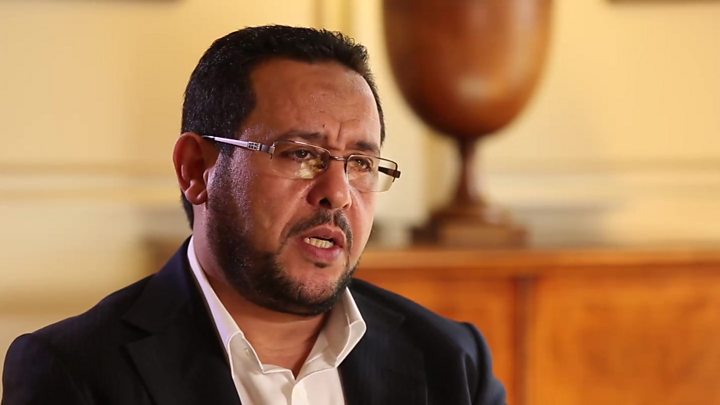
Media captionAbdul Hakim Belhaj: "I hope that it is a new page in history"
The UK government has apologised to a Libyan dissident and his wife after its actions contributed to their detention, transfer to Libya and his torture by Colonel Gaddafi's forces in 2004.
Prime Minister Theresa May said Abdul Hakim Belhaj and Fatima Boudchar had suffered "appalling treatment". 
Ms Boudchar, who was pregnant at the time, has accepted Mrs May's apology and will receive a £500,000 payout.
The couple say an MI6 tip-off helped the US kidnap them in Thailand.
Mr Belhaj was taken to Tripoli and says he was tortured by his Libyan jailers during a six-year spell in prison. Ms Boudchar was also detained but was released shortly before giving birth. 
Speaking to BBC News, he said the apology should serve as a "lesson" to governments not to repeat the couple's rendition.
"I hope that it is a new page in history, that we guarantee and strengthen human rights and this practice is not repeated which violated mine and my wife's rights."
Mr Belhaj added the six years the family waited for this was "an extension of the suffering for my family" on top of the years he was held captive.
In a letter read out in the Commons, Mrs May said UK actions had contributed to the couple's capture and that the government had "shared information" about them with "international partners".
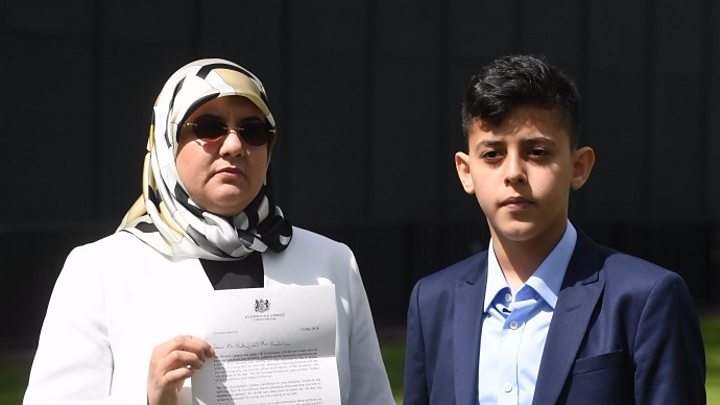
Media captionFatima Boudchar: "This is a historic day for us"
The letter said: "It is clear that you were both subjected to appalling treatment and that you suffered greatly, not least to the dignity of Mrs Boudchar, who was pregnant at the time.
"The UK government believes your accounts. Neither of you should have been treated this way. The UK government's actions contributed to your detention, rendition and suffering. The UK government shared information about you with its international partners."
Mrs May said the UK "should have done more to reduce the risk" of the pair being mistreated, adding: "We accept this was a failing on our part. On behalf of Her Majesty's government, I apologise unreservedly."
Ms Boudchar, who travelled to the UK with her son Abderrahim to hear the statement in Parliament, described the day's events as "historic" and called on world leaders to show solidarity for those who have suffered injustice "even if they're of different religion or culture".
Presentational grey line

The documents that forced the UK to apologise

By Dominic Casciani
The settlement is the first time ministers have apologised for a specific act involving British security agencies.
Papers discovered in Tripoli, Libya - during the fall of the dictator Colonel Muammar Gaddafi in 2011 - included evidence of how MI6 and the CIA had groomed Gaddafi and his regime to come in from the cold.
The UK's plan was to convince Gaddafi to not only stop threatening the West, but to also provide intelligence on Libyan dissidents and their potential links to al-Qaeda.
Details of secret conferences and documents referring to Mr Belhaj have emerged and help illustrate how the rendition case developed. 
Presentational grey line

'Humane' treatment assurances

Attorney General Jeremy Wright, who read out Mrs May's letter, said Mr Belhaj had not sought and would not receive financial compensation. 
However, friends of the couple said the UK had agreed to pay Mr Belhaj and Ms Boudchar's "substantial" legal fees.
Jack Straw, foreign secretary at the time of the rendition case, issued a statement in which he said he had "sought to act at all times in a manner which was fully consistent with my legal duties, and with national and international law".
He said it had been part of his role to approve "a wide range of matters to protect our national security" including the sharing of information with international partners.
This included getting assurances that those concerned were being treated humanely, he said.

Who is Abdul Hakim Belhaj?

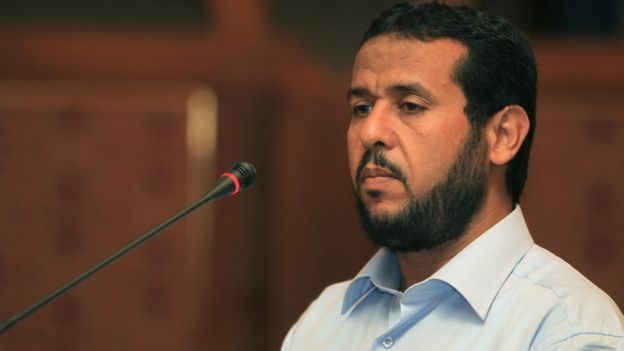
Abdul Hakim BelhajImage copyrightAFP
Image captionAbdul Hakim Belhaj led an Islamic group fighting against the Libyan government
Mr Belhaj was born in 1966 in the Souq al-Jumaa area of Tripoli and studied at al-Fateh University, where press reports say he earned a civil engineering degree.
He became an opponent of Libyan leader Col Muammar Gaddafi and commanded the now defunct Libyan Islamic Fighting Group which staged a low-level insurgency war and attempted to assassinate Col Gaddafi three times.
He fled the country in 2001 but was three years later abducted in Bangkok - along with his wife, then five-months pregnant - while attempting to fly to London to claim asylum in the UK.
Mr Belhaj is now a politician in Libya.